Enterprise IoT Security: How to Protect Your Edge Network from Cyber Threats
The Hidden Risk in Modern IoT Environments
The rapid growth of IoT has transformed how businesses operate, but it has also created a serious security gap that most organizations are not fully prepared for. Smart cameras, IoT sensors, and connected office systems are typically built for convenience and cost efficiency, not security. That design priority makes them attractive targets for attackers looking for easy entry points into corporate networks.
The problem runs deeper than the devices themselves. Most enterprises invest heavily in intrusion detection, intrusion prevention, and centralized logging at their core network. But edge environments, such as remote offices, clinics, and small business locations, often run on consumer-grade routers with minimal monitoring and no visibility into what is actually happening. The result is a dangerous mismatch: enterprise-level threats facing consumer-level defenses.
Why IoT Devices Are a Growing Target
Over 70 percent of IoT devices in production environments operate with known, unpatched vulnerabilities. Attacks against these devices are largely automated and continuous. Attackers run persistent scans looking for weak credentials, open ports, outdated firmware, and flat networks with no segmentation. When they find a way in, they do not just compromise the device. They use it to spy on internal traffic, deploy ransomware, recruit the network into botnets, and pivot deeper into critical systems.
Small and mid-sized businesses are disproportionately affected because the assumption that “we are too small to be targeted” still leads many owners to underinvest in edge security. The reality is that smaller organizations are often easier targets precisely because their defenses are weaker, not because attackers specifically chose them.
The Solution: Enterprise-Grade IDPS at the Edge
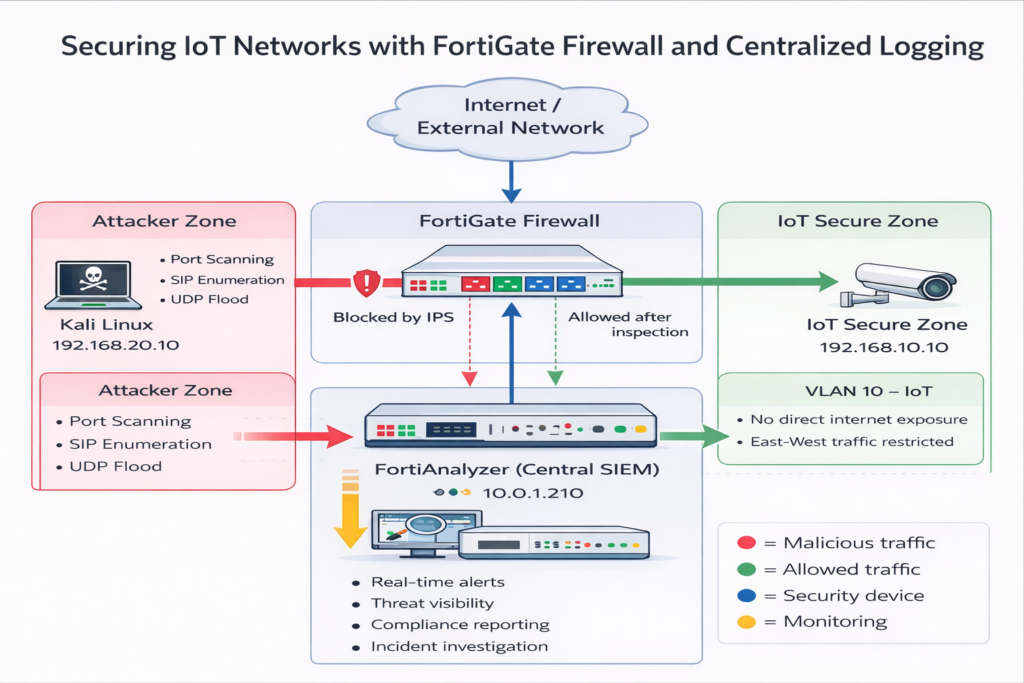
1. Next-Generation Firewall (NGFW)
Acts as the single enforcement point, inspecting all incoming and outgoing traffic using Deep Packet Inspection (DPI).
2. Centralized Logging & Analytics
Tools like FortiAnalyzer provide:
- Real-time monitoring
- Event correlation
- Full visibility across the network
3. Network Segmentation
The architecture divides the network into:
- Trusted Zone (IoT devices)
- Untrusted Zone (external threats)
- Management Zone (security controls)
This ensures:
Least-privilege access
Contained breaches
Better monitoring
What Makes Enterprise Security Different?
Most businesses think “we have a firewall = we are secure.”
That’s not true.
Basic Firewall vs Enterprise Security
| Feature | Basic Setup | Enterprise-Grade (AAA NetworkX Approach) |
| Traffic Inspection | Port-based | Deep Packet Inspection (DPI) |
| Threat Detection | Limited | Signature + Behavioural |
| Visibility | Minimal logs | Centralized analytics |
| Response | Manual | Automated blocking |
| Segmentation | None | Strict zone isolation |
The key difference is visibility + automation
Enterprise systems don’t just allow/block traffic; they understand behaviour and react in real time
Real-World Testing: How Attacks Were Stopped
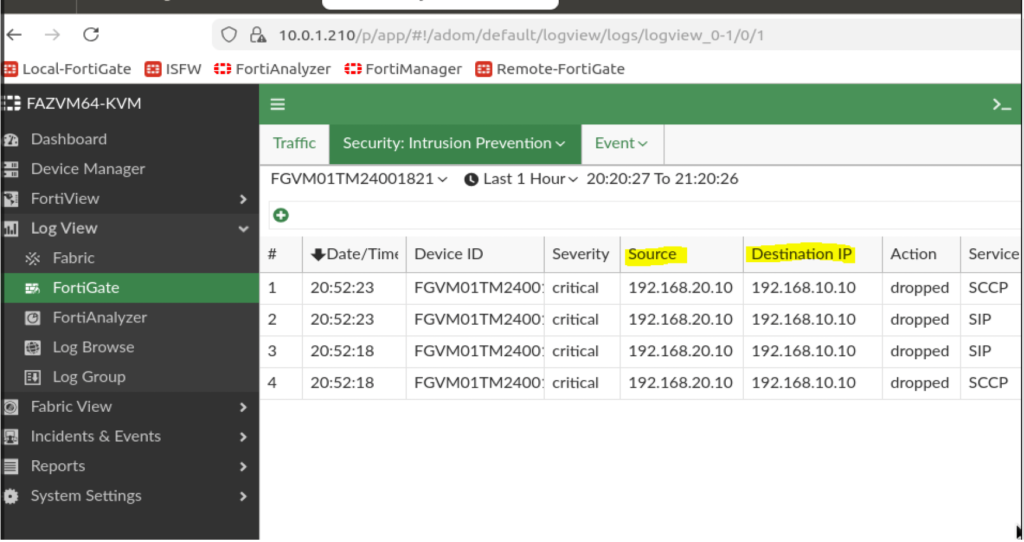
1. Advanced Reconnaissance Attacks
Attackers used aggressive scanning techniques to identify open ports.
Result:
- Threat detected instantly
- Escalation classified as critical
- Traffic automatically blocked
The system effectively “cloaked” the device from attackers
2. Protocol-Level Probing (SIP Attacks)
IoT cameras often rely on SIP (Session Initiation Protocol), making them vulnerable.
Result:
- Legitimate traffic allowed
- Suspicious activity logged and monitored
- Full visibility maintained
3. Denial-of-Service (DoS) Attacks
A high-volume UDP flood was launched to overwhelm the system.
Result:
- Anomaly-based detection triggered
- Malicious source blacklisted
- Device remained operational
This proves that behaviour-based security is critical for modern threats
Key Takeaways for Businesses
Visibility = Security
Without centralized logging, threats go unnoticed.
Behavior-Based Detection Wins
IoT traffic is predictable, making anomalies easier to detect.
Segmentation Prevents Breaches
One compromised device should NEVER expose your entire network.
What This Means for Your Business
If your organization uses:
- Smart cameras
- VoIP systems
- Cloud-connected devices
- Remote offices
You are already operating in an IoT edge environment
And likely:
Lack enterprise-grade protection
Have limited visibility
Are vulnerable to silent attacks
How AAA NetworkX Can Help
At AAA NetworkX, we design and deploy:
Fortinet-based firewall & IDPS solutions
Secure network segmentation architectures
Real-time monitoring & threat detection
IoT security hardening for businesses
Whether you’re a:
- Medical clinic
- Small business
- Enterprise with remote sites
We bring enterprise-level security to your edge network.
Get a Free Security Assessment?
If you’re unsure about your current security posture, we’ll help you identify risks and fix them fast.
At AAA NetworkX, we design and troubleshoot real-world network environments, including:
Network performance optimization
Site-to-site VPNs (WireGuard & IPsec)
Firewall and security configuration
About the Author
George Takyi Nti
Cybersecurity & Network Security Specialist
George specializes in designing and deploying enterprise-grade security architectures, with a focus on Intrusion Detection and Prevention Systems (IDPS), Fortinet solutions, and IoT infrastructure protection. His work centers on strengthening edge network security through advanced threat detection, network segmentation, and real-time monitoring.