WireGuard vs IPsec: Why Your VPN Connects But Doesn’t Work
Most VPN issues aren’t configuration errors; they’re design problems.
During a real-world deployment between an on-prem network and AWS, we encountered a frustrating issue:
The VPN tunnel was fully established… but no traffic was passing.
At first glance, everything appeared correct. But as we dug deeper, it became clear that real-world networking behaves very differently from theory.
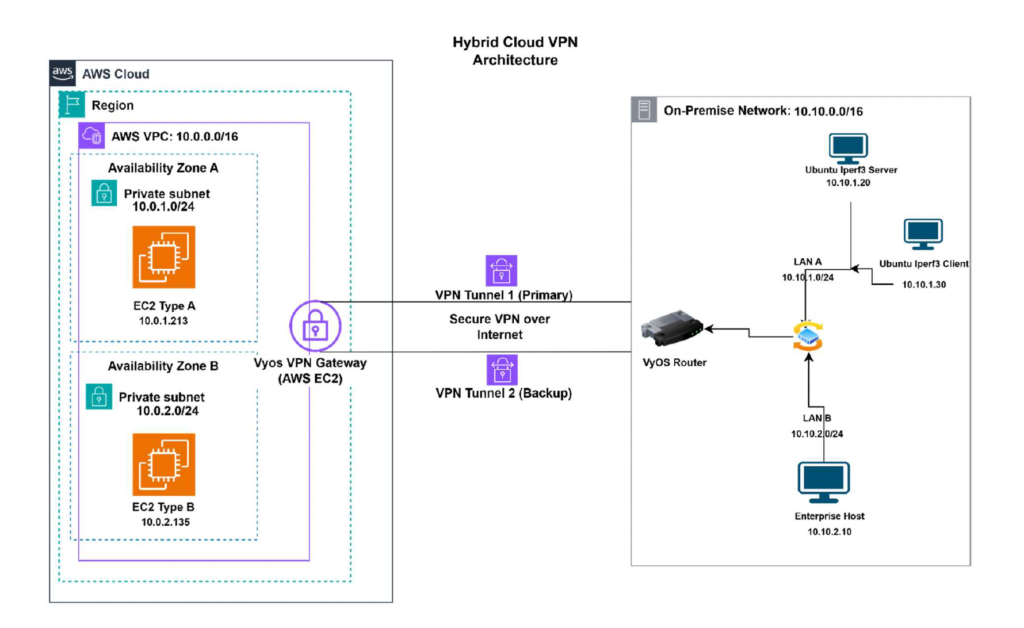
The Setup: Hybrid Cloud VPN
In this deployment :
- AWS VPC: 10.0.0.0/16
- On-prem network: 10.10.0.0/16
- VyOS routers on both ends
- EC2 instances across subnets
- Site-to-site VPN over the internet
The goal was simple: establish secure communication between cloud and on-prem environments.
The Problem: Tunnel Up, No Traffic
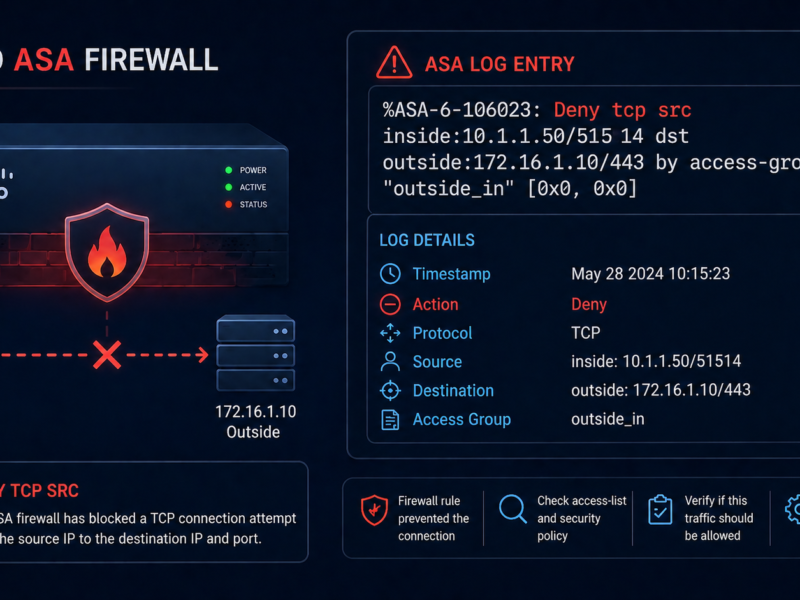
The VPN appeared connected, yet no traffic was passing between the networks.
This is a frequent and often misunderstood VPN problem.
“Connected” does NOT guarantee it’s functioning properly.
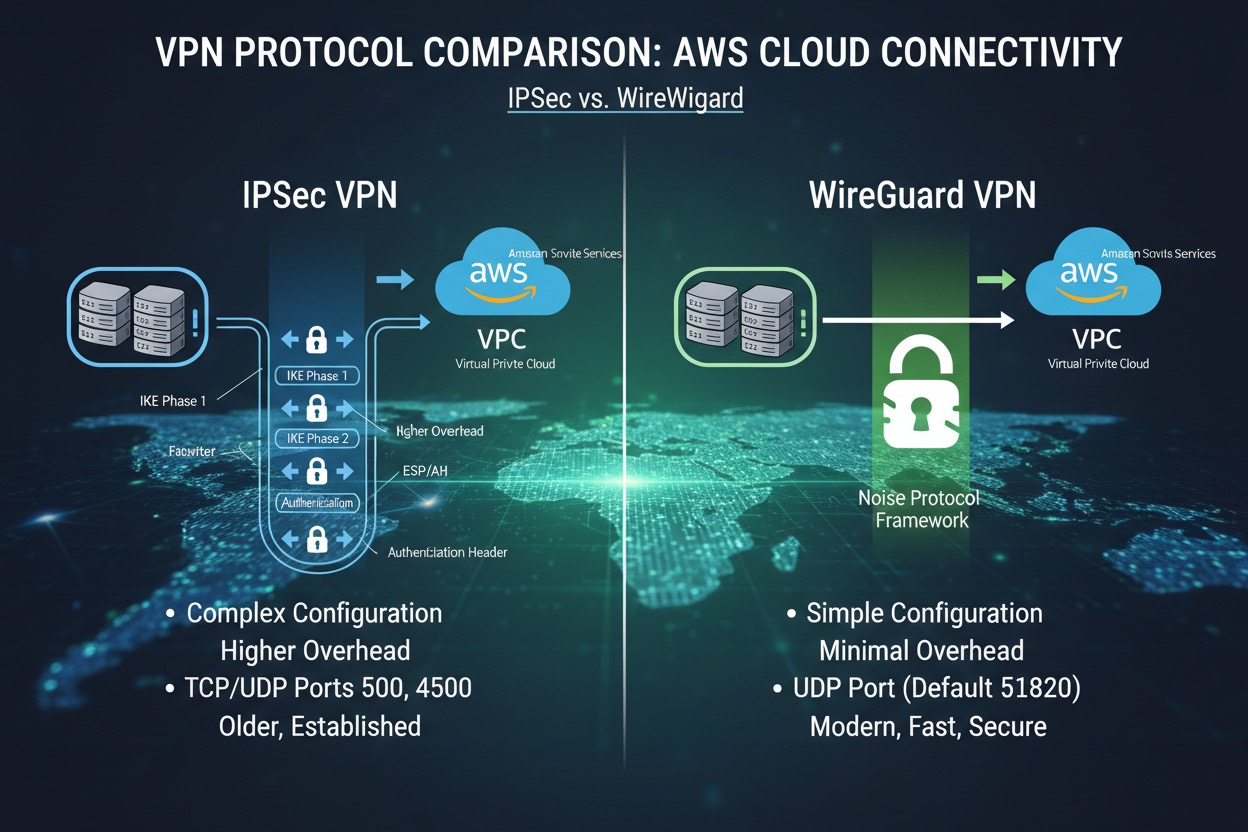
IPsec: Powerful but Complex
IPsec is the standard for enterprise VPNs and is widely supported across platforms.
However, it comes with complexity:
- Phase 1 (IKE) and Phase 2 configurations
- Encryption and hashing algorithms
- Tunnel policies and routing rules
- Firewall and security configurations
Even when everything appears correct, issues can still occur.
Where Things Break
In this case, the issue was caused by NAT (Network Address Translation) .
IPsec relies on protocols such as IKE and ESP, which are sensitive to NAT traversal. Without proper handling, traffic may be translated before reaching the VPN endpoint, breaking communication.
This leads to “working” tunnels that silently fail.
WireGuard: A Simpler Approach
WireGuard simplifies VPN deployment significantly.
Instead of complex multi-phase setups, it uses:
- Public and private keys
- Peer definitions
- Allowed IP ranges
That’s it.
Why It Works Better
WireGuard operates over a single UDP port, making it far more effective in NAT environments .
This results in:
- Faster setup
- Easier troubleshooting
- More consistent connectivity
Performance Comparison
Testing with iperf3 showed:
- WireGuard achieved higher throughput
- Lower latency
- Faster responsiveness
- IPsec provided stronger long-term stability
The differences weren’t extreme, but they were enough to highlight key trade-offs.
WireGuard vs IPsec: Quick Comparison
| Feature | WireGuard | IPsec |
|---|---|---|
| Setup | Simple | Complex |
| Performance | High | Moderate |
| NAT Handling | Better | Sensitive |
| Stability | Good | Strong |
| Usage | Growing | Standard |
What This Means for Your Business
If your VPN is poorly designed, you may experience:
- Intermittent connectivity issues
- Slow performance between office and cloud
- Increased troubleshooting time
- Hidden downtime
Choosing the right VPN, and configuring it correctly, can prevent these problems entirely.
Key Takeaways
- Network environment plays a major role in VPN performance
- NAT can break IPsec even when tunnels appear connected
- Simpler configurations reduce errors
- Real-world testing is critical
Need Help With VPN or Cloud Connectivity?
If your VPN is unreliable, slow, or just not working, we can help.
At AAA NetworkX, we design and troubleshoot real-world network environments, including:
Network performance optimization
Site-to-site VPNs (WireGuard & IPsec)
Firewall and security configuration
About the Author
Edberg Hammond is a network and cloud specialist at AAA NetworkX, specializing in hybrid cloud networking, VPN deployment, and secure infrastructure design.
He has hands-on experience solving real-world issues such as VPN tunnels that connect but fail to pass traffic, helping businesses avoid downtime and performance issues.
Based in Edmonton, Edberg works with organizations to design and troubleshoot reliable, scalable IT environments.