How AAA NetworkX Built a Scalable and Secure IT Foundation for Fourien
When a company is building scientific instruments that measure liquids in picoliter volumes, the precision standard on the lab bench has to extend to the network behind it. Data integrity, instrument firmware control, and protection of patent-stage research are not optional. They are part of the product.
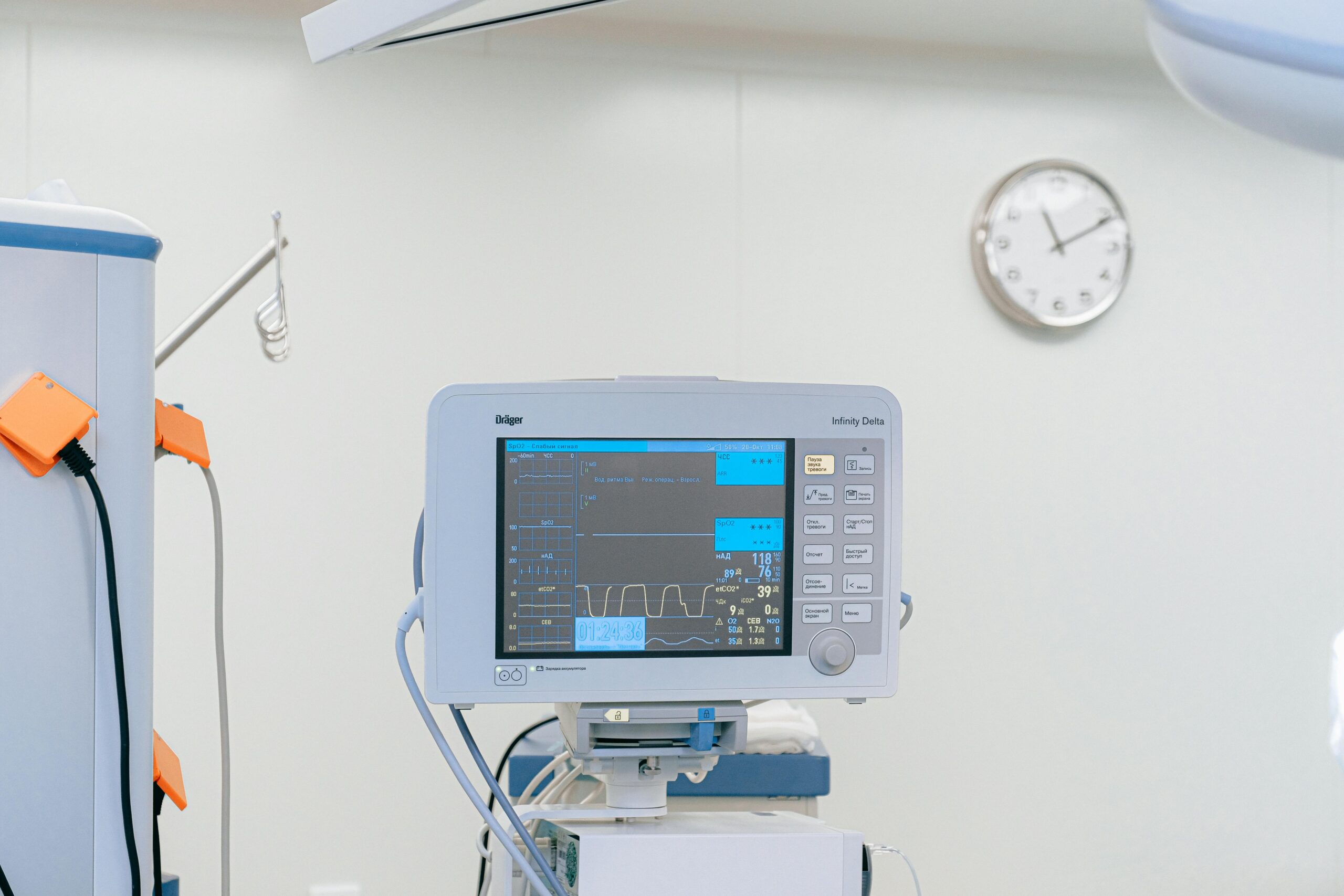
That was the operating reality for Fourien Inc., an Edmonton-based developer of analytical instruments and BioMEMS microchips used in diagnostics, biotech research, pharmaceutical development, and materials characterization. Their portfolio includes products like the Picomeasure PM3, Quester Q10, Contiflow, and Spinmatrix, instruments deployed to research labs, pharmaceutical companies, and academic institutions across multiple regions. As Fourien scaled from a focused R&D operation toward broader commercial deployment, the supporting IT environment had to scale with it.
This case study walks through how AAA NetworkX worked with Fourien to modernize that environment, with an emphasis on the requirements that are specific to a high-precision instrumentation company.
Why generic IT support was not enough
Fourien’s day-to-day IT looks different from a typical office environment. Their workflows include large datasets generated by analytical runs, firmware exchanges with shipped instruments, secure transfer of design files to fabrication partners, and collaboration with researchers and customers in other countries.
A few realities shaped the engagement from the start:
- Each instrument is, in effect, a small computer with its own operating system, storage, and network requirements.
- Calibration data, raw measurement files, and design documentation are intellectual property assets, not just operational records.
- Customer-facing work often involves sharing sensitive data across organizations, which means access controls have to be auditable.
- The team is small relative to the complexity of the product, so the IT environment has to reduce overhead, not add to it.
A generic managed IT package would have layered on tooling without solving the underlying alignment between infrastructure and how Fourien actually works. The engagement was scoped as a partnership instead.
Assessment first, deployment second
AAA NetworkX opened the work with a full assessment of Fourien’s network topology, cloud usage, endpoint posture, and access controls. The output was a prioritized list, separating fix in the first thirty days, redesign in the next quarter, and monitor and revisit as the company grows.
This sequencing matters in a research-driven business. Disruptive changes during a measurement campaign or a customer demo are not acceptable, so the assessment phase became the planning artifact that everything else mapped to.
Cloud architecture that fits a small, high-IP team
A scalable cloud platform was designed around three principles: clear environment separation, role-based access, and dynamic scaling for compute-heavy analytical workloads.
Development, testing, and production were split into distinct environments so a change in one could not affect the others. Role-based access control gave engineers, leadership, and external collaborators only the permissions they needed, with audit logging on every privileged action. Compute resources were configured to expand during heavier analytical runs and contract during quieter periods, keeping cost predictable without limiting capability.
The cloud design also accounted for the data lifecycle. Raw instrument output, processed analyses, and reference datasets each have different retention, integrity, and access requirements. Treating them as one bucket was not viable. Each was given its own posture.
Network design tuned to lab and research workflows
Fourien’s network was redesigned around segmentation. Instrument workstations, R&D systems, business operations, and visitor or partner access were placed on isolated VLANs. This isolation accomplishes two things at once. It prevents a quiet office device from interfering with an instrument data feed, and it limits the blast radius if any single endpoint is compromised.
Redundant connectivity paths were added for critical workloads, and monitoring tools were deployed to give visibility into latency, packet loss, and access anomalies in real time. The team can now see and act on issues before researchers feel them.
Cybersecurity that protects intellectual property
For a company whose competitive moat sits in patents, instrument designs, and proprietary calibration data, cybersecurity is not a checkbox. It is an asset-protection function.
The security layer for Fourien includes next-generation firewalls, endpoint detection, identity-aware access controls, and secure remote access for distributed collaborators. Documentation of policies, configurations, and change management was treated as a deliverable, not an afterthought, which positions Fourien well for any future audit, supplier review, or partnership due diligence.
Security was integrated into the design from day one rather than retrofitted, which is the difference between a posture that holds up under scrutiny and one that only looks defensible on paper.
Day-to-day operations after the rollout
With the environment in place, the visible day-to-day change at Fourien is the absence of noise. Fewer interruptions to research workflows. Fewer late-night calls about firmware update conflicts. Faster turnaround on user access requests. The engineering and research teams spend more time on what they were hired to do.
Behind the scenes, proactive monitoring and a documented support process catch and resolve most issues before they reach users. When something does need human attention, the response is grounded in clear context, not a fresh investigation each time.
Outcomes
With the new environment in place, Fourien has gained reduced unplanned downtime during research workflows, faster turnaround on user access and permissions changes, clearer audit trails for sensitive data handling, and a documented IT posture that supports future compliance and partnership reviews. Most operational issues are now detected and resolved before they affect users, and the team spends less time on infrastructure troubleshooting and more on product development.
Why this kind of partnership matters
Fourien is one of several Edmonton technology companies who have moved past treating IT as a service contract and started treating it as part of the product development discipline. The same principles apply to peers in other technical fields, including industrial automation companies like Aro Robotic Systems, where the demands on the network and security posture are equally specialized.
The common thread is straightforward. Companies building complex technology need infrastructure that is engineered with the same care they give the product itself.
Work with AAA NetworkX
If your technology company is operating with infrastructure that no longer fits the scale or sensitivity of your work, AAA NetworkX can help. We design and operate secure, scalable, audit-ready IT environments for companies whose data, intellectual property, and uptime are central to the business. Contact us to discuss your environment.